
LATEST NEWS


Innovative Applications of Tactile Directional Indicators in Commercial Spaces
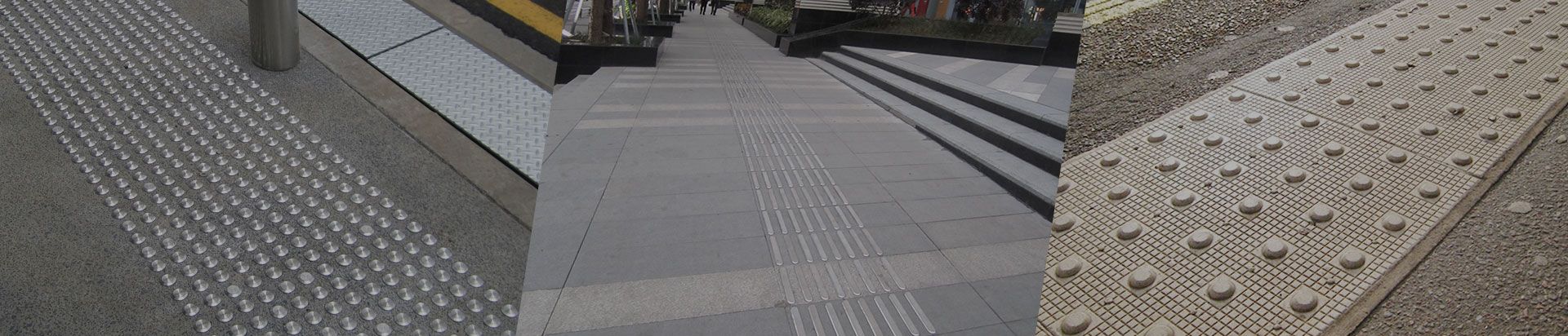
As society's demand for accessible design continues to increase, commercial establishments are gradually placing more emphasis on providing a convenient and comfortable shopping environment for different groups. Directional tactile indicators, as an innovative accessible facility, have begun to be widely used in various commercial venues. They not only provide safe guidance for visually impaired individuals but also enhance the overall customer experience and the social responsibility of commercial establishments.
1. Providing clear guidance for visually impaired individuals
The primary function of directional tactile indicators is to provide clear tactile guidance for visually impaired individuals. In large commercial centers or shopping malls, due to the vast space and complex layout, visually impaired individuals can easily lose their way without tactile guidance. Directional tactile indicators, through different textures and raised markings, help visually impaired individuals perceive the direction of travel, thereby reaching their target areas safely and effectively. For example, at key locations such as mall entrances, floor transitions, and emergency exits, directional tactile indicators can help visually impaired individuals smoothly find target areas or safe passages.
2. Enhancing the shopping experience for customers
Directional tactile indicators not only provide convenience for visually impaired individuals but also enhance the shopping experience for all customers. Modern malls and shopping centers focus not only on accessible design but also on improving customer satisfaction. By setting clear path guidance and area divisions within the mall, directional tactile indicators help visually impaired individuals and other customers find the necessary areas more smoothly. Additionally, the design of directional tactile indicators integrates with the overall style of the mall, maintaining aesthetics while enhancing brand image.
3. Enhancing the brand image of commercial establishments
By adopting directional tactile indicators and other accessible facilities, commercial establishments can demonstrate their social responsibility and establish a responsible brand image. Consumers increasingly value whether malls care for disabled individuals, and the completion of accessible facilities like directional tactile indicators can effectively enhance the mall's image and reputation. Through innovative accessible design, malls can not only provide better services but also gain more respect and loyalty from customers.
4. Integration with intelligent systems
With the development of intelligent technology, directional tactile indicators are gradually integrating with intelligent systems, bringing more innovation. For example, malls can combine directional tactile indicators with smartphone apps to provide real-time navigation functions, helping customers easily find target products or stores. Moreover, directional tactile indicators can also integrate with the mall's intelligent lighting and automated access control systems to enhance the customer experience and create a more intelligent accessible environment.
In conclusion, the innovative application of directional tactile indicators in commercial establishments not only meets the demand for accessible design but also enhances the shopping experience for customers and the brand image of malls. In the future, with the development of intelligent technology, directional tactile indicators will continue to integrate with more technologies, promoting further improvement in the accessible design of commercial establishments. If you need high-quality directional tactile indicators, feel free to contact Xiongchang Hardware. We offer various specifications and customization services to help your commercial establishment achieve a more complete accessible design, enhancing the customer experience.
LATEST NEWS
 English
  日本語
日本語  français
  Deutsch
  Español
  italiano
  русский
  português
  العربية
  ไทย
ไทย  Polska
  中文
中文