
LATEST NEWS


Tactile Ground Surface Indicators (TGSI): Complete Guide for Safe Public Infrastructure Design
As cities become more inclusive and accessibility regulations continue to evolve worldwide, Tactile Ground Surface Indicators (TGSI) have become an essential component of modern public infrastructure design. These tactile systems help visually impaired and elderly individuals navigate complex environments safely and independently, reducing accident risks and improving overall urban accessibility.
This guide explains what TGSI systems are, how they work, where they are used, and why they are critical for universal design in public spaces.
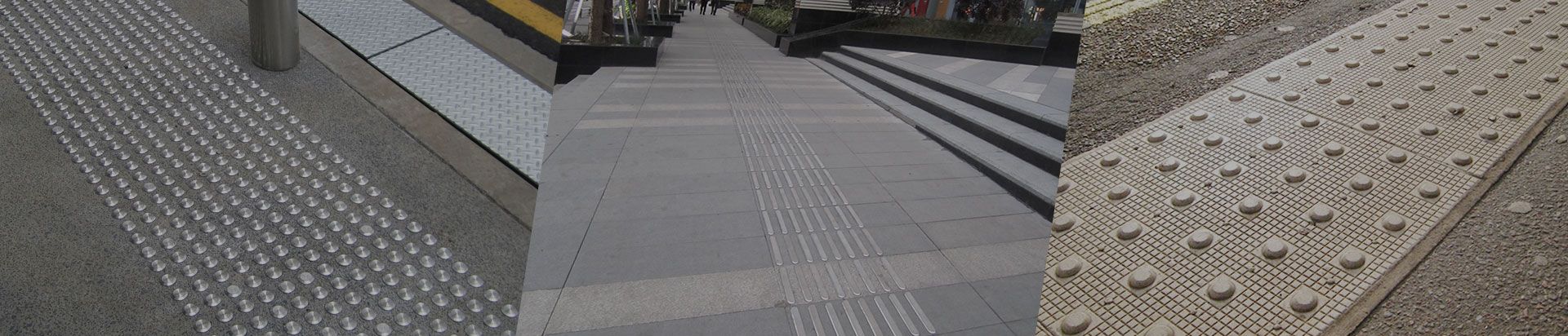
Tactile Ground Surface Indicators (TGSI) are specially designed textured surfaces installed on pedestrian walkways to provide tactile feedback through the soles of the feet or a white cane. They are commonly made from materials such as stainless steel, polyurethane, rubber, or ceramic, depending on the application environment.
TGSI systems are used to communicate essential navigation information, including:
Direction guidance
Warning of hazards
Identification of platform edges or staircases
Changes in walking routes
By converting visual information into tactile signals, TGSI systems enable safer and more independent movement for visually impaired users.
Modern cities are designed for high mobility, but this often creates challenges for individuals with visual impairments or reduced mobility. TGSI systems address these challenges by providing consistent tactile cues in key locations.
Enhancing Safety for Visually Impaired Users
One of the primary functions of TGSI is to reduce accidents caused by unexpected obstacles or environmental changes. Warning indicators alert users to hazards such as stairs, road crossings, escalators, or platform edges.
Supporting Elderly Mobility in Aging Societies
As populations age, many individuals experience declining vision and balance. TGSI systems play a crucial role in helping elderly users navigate safely in public environments, particularly in transportation hubs, hospitals, and commercial buildings.
Compliance with Accessibility Standards
Many countries and regions have introduced strict accessibility regulations requiring tactile guidance systems in public infrastructure. TGSI helps architects and developers meet these compliance requirements while improving user experience.
TGSI systems are generally divided into two main categories, each serving a specific function in wayfinding design.
Directional tactile indicators consist of raised linear patterns that guide users along safe walking paths. These are commonly installed in:
Pedestrian walkways
Transit stations
Building corridors
Public plazas
They help users maintain orientation and follow a safe route through complex environments.
Warning indicators use a dotted or domed surface pattern to signal caution. They are typically installed at:
Staircases
Platform edges
Road crossings
Escalator entrances
These indicators alert users to potential hazards ahead, allowing them to slow down or change direction safely.
The performance and durability of TGSI products depend heavily on material selection. Different environments require different material properties.
Stainless steel is widely used in outdoor and high-traffic areas due to its durability, corrosion resistance, and modern appearance. For example, stainless steel tactile indicators are suitable for airports, metro stations, and commercial plazas.
PU materials offer flexibility, impact resistance, and cost-effectiveness. They are often used in indoor environments such as shopping malls and office buildings.
Ceramic and stone indicators are commonly used in architectural projects where aesthetic integration is important, such as cultural sites or high-end public spaces.
TGSI systems are widely implemented across various infrastructure environments where pedestrian safety and accessibility are priorities.
Transportation Hubs
Airports, train stations, subway systems, and bus terminals rely heavily on TGSI systems to guide passengers safely through large and complex layouts.
Healthcare Facilities
Hospitals and rehabilitation centers use TGSI to help patients and visitors navigate efficiently between departments, emergency exits, and service areas.
Educational Institutions
Schools and universities increasingly incorporate TGSI into campus design to ensure inclusive access for students, staff, and visitors.
Commercial and Residential Buildings
Shopping malls, office buildings, and residential complexes use TGSI to improve accessibility and comply with universal design principles.
TGSI is most effective when combined with other accessibility solutions, creating a complete wayfinding system.
One important complementary system is braille signage, including solutions such as braille handrails and wall-mounted signs. These provide detailed location and directional information in tactile form.
In large-scale projects, developers often source wholesale braille signs alongside TGSI systems to ensure consistency in accessibility design.
Together, TGSI and braille systems form a comprehensive navigation framework that supports both tactile ground guidance and detailed location identification.
Selecting a professional tactile indicator manufacturer is critical for ensuring product quality, safety performance, and long-term durability.
Key factors to consider include:
Material quality and corrosion resistance
Anti-slip performance and surface texture design
Compliance with international accessibility standards
Production capability for large-scale infrastructure projects
Customization options for architectural integration
A reliable manufacturer can provide not only TGSI products but also complementary solutions such as braille signs, stair nosing systems, and other accessibility components.
As cities continue to develop toward smarter and more inclusive environments, TGSI systems will remain a foundational element of public infrastructure design. The integration of tactile, visual, and digital navigation systems will further enhance accessibility for all users.
Investing in high-quality TGSI systems today ensures safer, more inclusive, and more sustainable urban spaces for the future.
Tactile Ground Surface Indicators (TGSI) play a vital role in creating safe and accessible public environments. By providing tactile guidance through directional and warning patterns, they help visually impaired and elderly individuals navigate complex spaces with confidence.
When integrated with braille signage systems and supplied by a professional tactile indicator manufacturer, TGSI becomes a core component of universal design in modern infrastructure projects.
For architects, contractors, and developers, implementing TGSI is not just a compliance requirement—it is a commitment to building truly inclusive public spaces.
LATEST NEWS
 English
  日本語
日本語  français
  Deutsch
  Español
  italiano
  русский
  português
  العربية
  ไทย
ไทย  Polska
  中文
中文