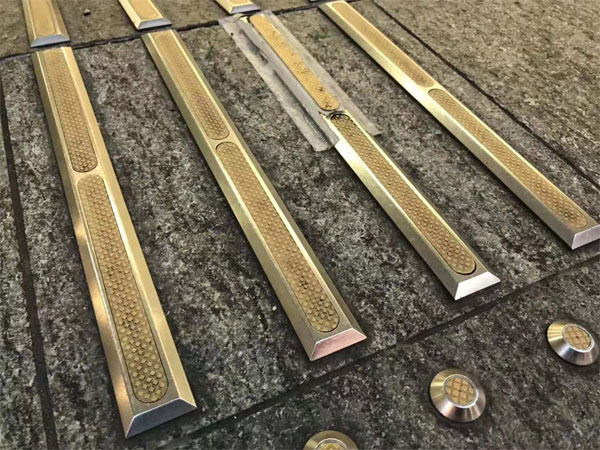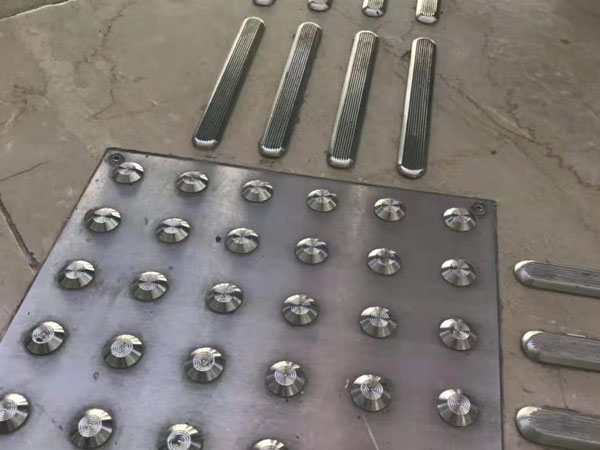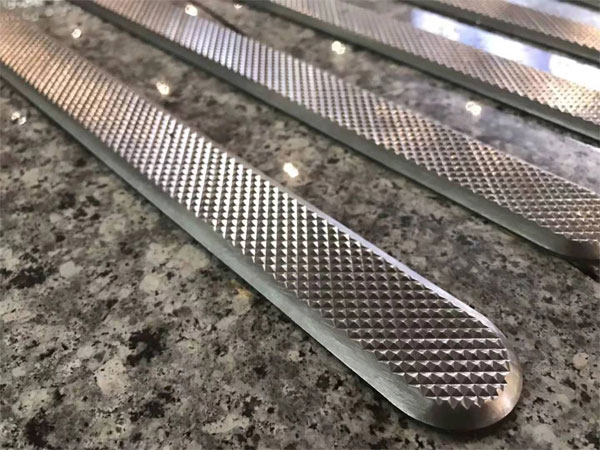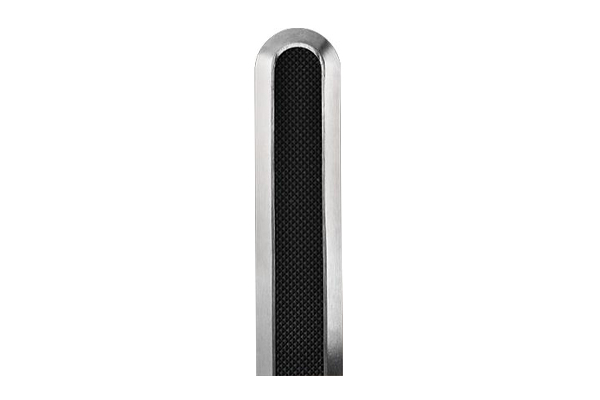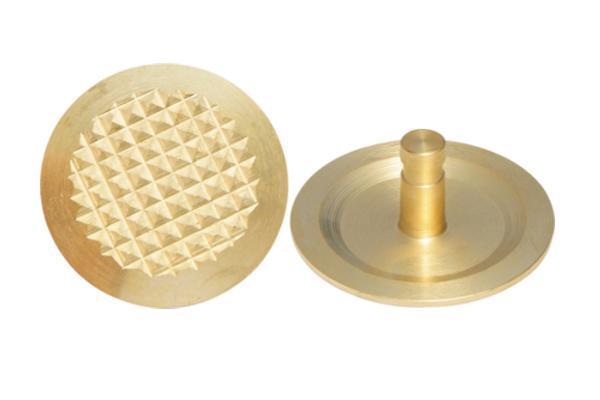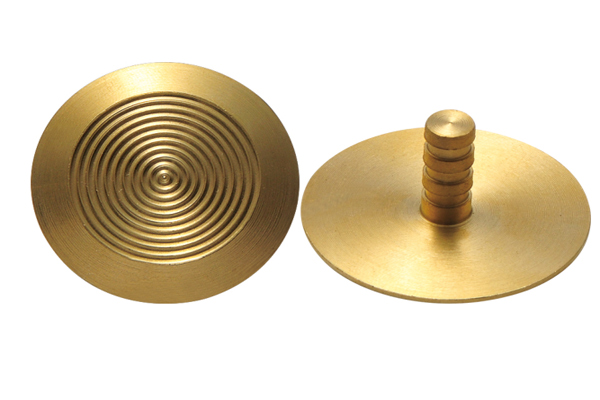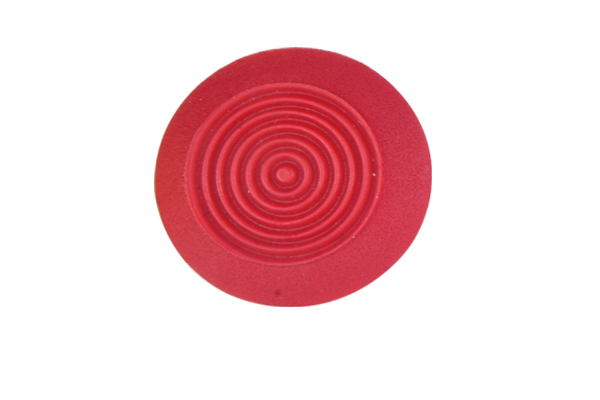

Multiple material grades available

Grooved, concentric, carborundum & more

Pin, screw, pressure fit & self-adhesive

For commercial and public accessibility projects
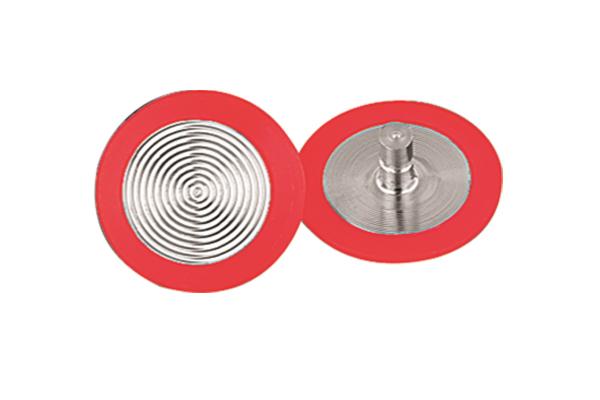
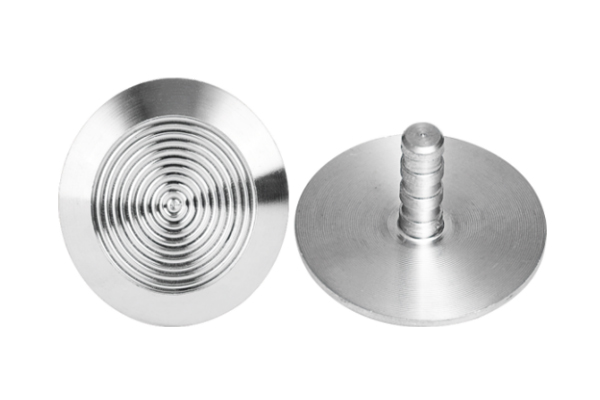 Concentric Circles Stainless Steel Tactile Studs
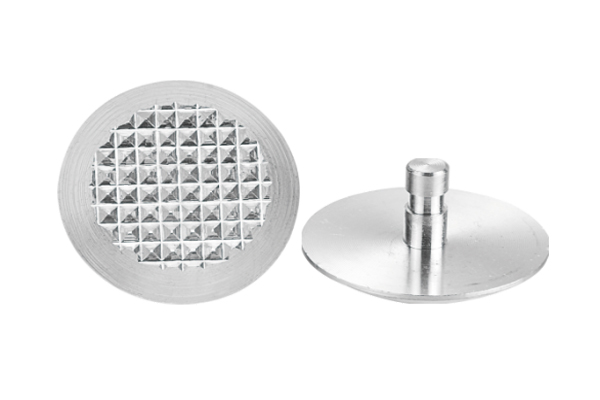
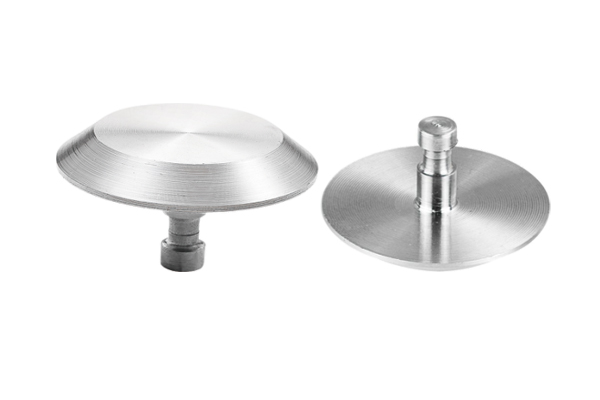 Flat SS Stud
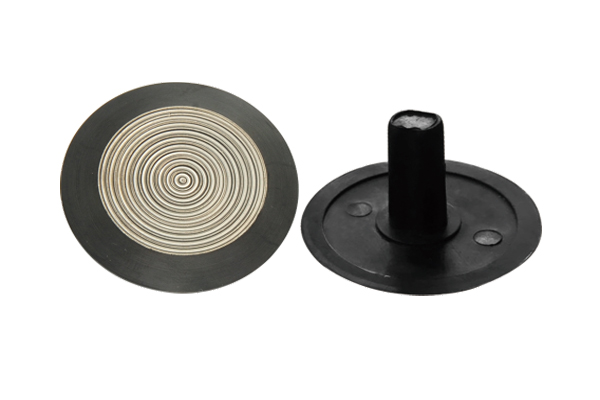
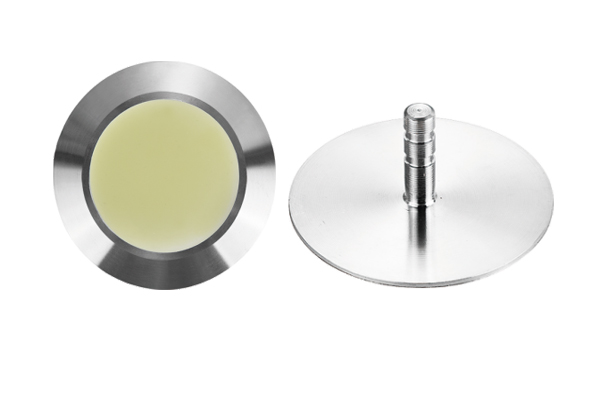 Luminous Stainless Steel Tactile Stud
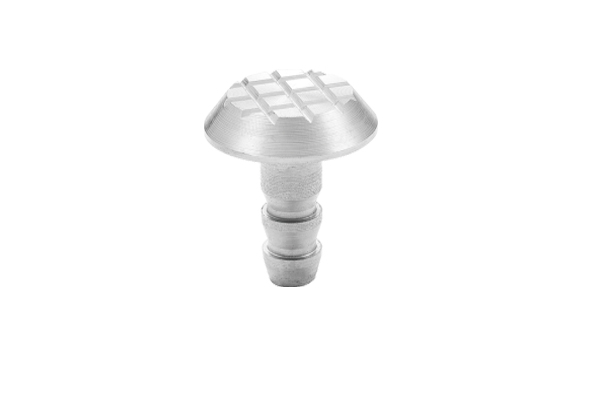
 Carborundum Insert Stainless Steel Tactile Studs
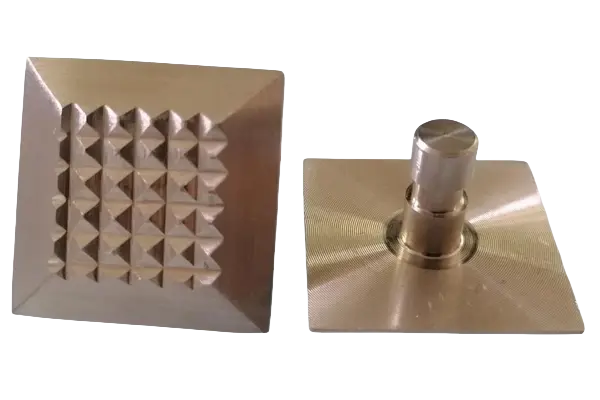 Waring Stainless steel tactile indicator (XC-MDD1721)
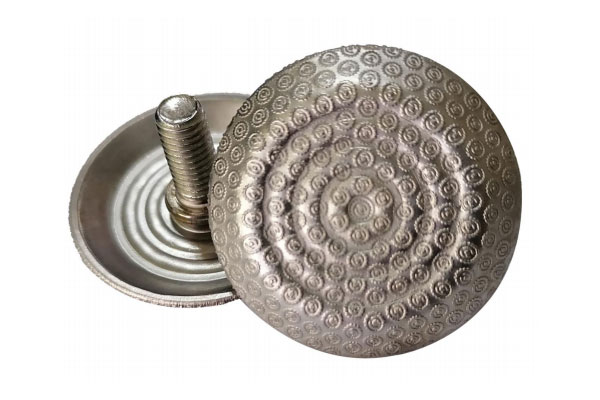 Waring Stainless steel Etched Tactile Studs (XC-MDD1526B)
The right tactile stud depends on the flooring material, installation method, environment and project specification. For standard drilled installation, pin-fixed tactile studs are a common solution. Self-adhesive studs can be considered for suitable finished surfaces where drilling needs to be minimized. Screw-and-plug or long-screw designs provide additional mechanical fixing options, while grooved or carborundum surfaces are available for projects with higher anti-slip requirements. Xiongchang can recommend suitable tactile stud designs according to your floor substrate, installation conditions and project requirements.
| Key Factor | Available Options | Recommended For | Selection Guide |
| Material Grade | Stainless Steel 304 | General indoor and outdoor commercial applications | A practical option for standard projects where good corrosion resistance and durability are required. |
| Material Grade | Stainless Steel 316 | Outdoor, coastal, humid or more demanding environments | Recommended where higher corrosion resistance is required. |
| Surface Design | Concentric Ring / Grooved / Diamond Pattern | General pedestrian and accessibility areas | Provides a tactile surface while allowing different architectural and appearance requirements. |
| Surface Design | Carborundum / Anti-Slip Insert | Wet areas, entrances and high-traffic locations | Suitable for projects requiring enhanced surface grip and anti-slip performance. |
| Installation Method | Classic Pin / Pressure Fit | Concrete, stone and other suitable drilled substrates | Suitable where mechanical fixing and secure installation are preferred. |
| Installation Method | Screw & Plug / Long Screw | Projects requiring stronger mechanical fixing | Recommended according to substrate thickness, floor structure and project requirements. |
| Installation Method | Self-Adhesive | Smooth and properly prepared finished surfaces | Suitable for selected applications where drilling needs to be minimized. |
| Floor Substrate | Concrete / Stone / Tile / Timber / Metal / Carpet | Different commercial and public environments | The fixing structure should be selected according to the actual floor material and installation conditions. |
| Installation Environment | Indoor / Outdoor | Stations, airports, malls, hotels, offices and public buildings | Consider moisture, corrosion exposure, pedestrian traffic and maintenance requirements when selecting the material and surface. |
| Visual Contrast | Natural Stainless Steel / Custom Finish | Accessibility projects with visual contrast requirements | Select a finish that provides sufficient contrast with the surrounding floor according to project requirements. |
| Project Standard | Project-Specific / Regional Accessibility Requirements | Public infrastructure and accessibility projects | Confirm applicable dimensions, layout, contrast and performance requirements before ordering. |
Both 304 and 316 stainless steel are suitable for tactile indicator studs, but they are designed for different installation environments.
Choose the material grade based on corrosion exposure, moisture conditions and project requirements.


General indoor and outdoor applications

Good corrosion resistance for standard commercial and public-access projects

Shopping malls, office buildings, hotels, schools, indoor stations and general public facilities

Suitable for relatively dry or moderately exposed environments

More economical for standard project requirements

Your project requires a durable and cost-effective stainless steel tactile stud for standard applications


Outdoor, coastal, humid and more demanding environments

Higher corrosion resistance for environments exposed to moisture, salt or more corrosive conditions

Outdoor walkways, transportation facilities, coastal projects and high-moisture environments

Recommended where enhanced durability and corrosion resistance are required

Higher material cost, but better suited to demanding environments

Your project is exposed to higher moisture, coastal conditions or requires increased corrosion resistance
XCWJC also provides tactile indicators in brass, aluminum and polyurethane to meet different durability, appearance and application requirements.
Best For
Concrete, stone, terrazzo and other drillable hard surfaces.
How It Works
The rear pin is inserted into a pre-drilled hole and secured with suitable adhesive to provide a stable and durable installation.
Suitable Floor
Concrete / Stone / Terrazzo / Other Drillable Hard Floors

Place the installation template in the required position. Drill the fixing holes according to the stud spacing and required installation depth.

Remove the template and clean dust and debris from the drilled holes. Make sure the holes are clean and dry before installation.

Apply suitable adhesive into the prepared holes, insert the tactile studs and gently secure them with a rubber hammer.
Best For
Projects requiring fast and secure mechanical fixing without additional adhesive.
How It Works
The specially designed stem is pressed directly into a correctly sized pre-drilled hole, creating a secure mechanical fit between the stud and the substrate.
Suitable Floor
Concrete / Stone / Terrazzo / Other Suitable Drillable Surfaces.
Use the installation template to mark the stud positions and drill holes to the required diameter and depth.
Remove all drilling dust and debris. Keep the holes clean and dry to ensure proper pressure fitting.
Align the tactile studs with the prepared holes and gently tap them into position using a rubber hammer until firmly secured.
Best For
Projects requiring deeper installation or additional mechanical fixing strength.
How It Works
The extended threaded stem passes through the installation surface and is secured using a matching nut or fixing component.
Suitable Floor
Suitable for flooring or structures that allow through-fixing. Final suitability depends on floor thickness and construction.
Position the installation template and drill the required holes according to the stud layout and screw dimensions.
Insert the threaded stem through the prepared hole and make sure the tactile stud sits correctly on the finished surface.
Attach the matching nut or fixing component from the opposite side and tighten it until the tactile stud is firmly secured.
Best For
Smooth finished surfaces where drilling needs to be minimized.
How It Works
The tactile stud is supplied with an adhesive backing that bonds directly to a clean, dry and properly prepared surface.
Suitable Floor
Smooth Tile / Stone / Metal / Other Suitable Finished Surfaces
Thoroughly clean the installation area and remove dust, grease, moisture and other contaminants. Allow the surface to dry completely.
Place the installation template in the required location to ensure accurate spacing and alignment of the tactile studs.
Remove the protective backing from the adhesive layer, position each stud carefully and press firmly onto the prepared surface.
Best For
Projects requiring strong mechanical fixing and a secure connection with the floor substrate.
How It Works
A fixing plug is inserted into a pre-drilled hole, and the tactile stud is secured mechanically using a matching screw.
Suitable Floor
Concrete / Stone / Masonry / Other Suitable Solid Substrates
Use the installation template to mark the required positions and drill holes according to the dimensions of the fixing plugs.
Clean the drilled holes and insert the fixing plugs until they are properly positioned within the substrate.
Position the tactile studs over the fixing points and tighten the screws until the studs are firmly and evenly secured.
Best For
Carpet flooring and other floor systems where conventional pin fixing may not provide sufficient support.
How It Works
A special stem, internal thread or connecting component passes through the carpet and connects the tactile stud securely to the underlying fixing structure.
Suitable Floor
Carpet / Carpet Tiles / Selected Raised or Layered Flooring Systems.
Use the installation template to determine the correct spacing and position of each tactile stud on the carpet surface.
Prepare the required opening and install the special stem, connector or internal-thread component through the carpet and underlying floor structure.
Connect the tactile stud to the fixing component and tighten it until the stud is stable and properly aligned with the surrounding tactile indicators.
Contact Xiongchang for professional recommendations for your project.
Stainless steel tactile studs are widely used as tactile ground surface
indicators in public infrastructure and commercial buildings. Typical applications include:


Tactile indicators for accessibility projects often need to meet specific dimensional, installation and performance requirements according to the destination market or project specification.
Xiongchang controls key production factors including raw material, product dimensions, surface finish, fixing structure and finished-product appearance during manufacturing.
For projects with specific accessibility standards or technical requirements, customers can provide drawings, specifications or required standards for evaluation before production.
Available project documentation may include material certificates, product drawings, inspection records and relevant test reports.
WuYi XiongChang Hardware Manufacturing Co., Ltd. has specialized in tactile indicator manufacturing since 2001. With a 10,000 m² factory, 100+ employees and CNC production equipment, Xiongchang provides stainless steel tactile indicators for commercial, public infrastructure and accessibility projects.


Focused on tactile indicators and accessibility products since 2001.
CNC equipment and production capabilities support stable quality and consistent specifications.
Stainless steel, brass, aluminum and polyurethane products are available for different project requirements.
Support for customized sizes, surfaces, fixing methods and project specifications.
Xiongchang tactile indicators are supplied for
accessibility and architectural projects in different markets.
Xiongchang tactile indicators are supplied for accessibility and architectural projects in different markets.
Stainless steel tactile indicator studs are individual raised tactile elements installed on walking surfaces to provide tactile warning or orientation information in accessibility environments. They are commonly used in transportation facilities, commercial buildings and public spaces.
304 stainless steel is commonly used for general applications, while 316 stainless steel offers higher corrosion resistance and may be preferred for more demanding outdoor or high-moisture environments. The final selection should depend on the project environment and specification.
XCWJC manufactures different tactile stud sizes and structures. Standard or customized dimensions can be supplied according to project drawings and technical requirements.
Different fixing systems are available for different substrates. The appropriate installation method should be selected according to the floor structure, project conditions and tactile stud design.
Yes, self-adhesive options are available for selected applications and suitable prepared surfaces.
Yes. Customized sizes, surfaces, fixing structures and other specifications can be developed based on drawings, samples or project requirements.
Contact Xiongchang for professional recommendations for your project.
 English
 日本語
 français
 Deutsch
 Español
 italiano
 русский
 português
 العربية
 ไทย
 Polska
 中文